Few San Francisco neighborhoods reward a slow walk the way Pacific Heights does. You are not just heading to one landmark here. You are moving through a hillside sequence of Bay views, terraced parks, stairways, historic facades, and quiet corners that reveal themselves block by block. If you want to know where the most scenic stretches are, where to pause, and which hidden corners are worth the detour, this guide will help you map a memorable stroll. Let’s dive in.
Why Pacific Heights Feels So Walkable
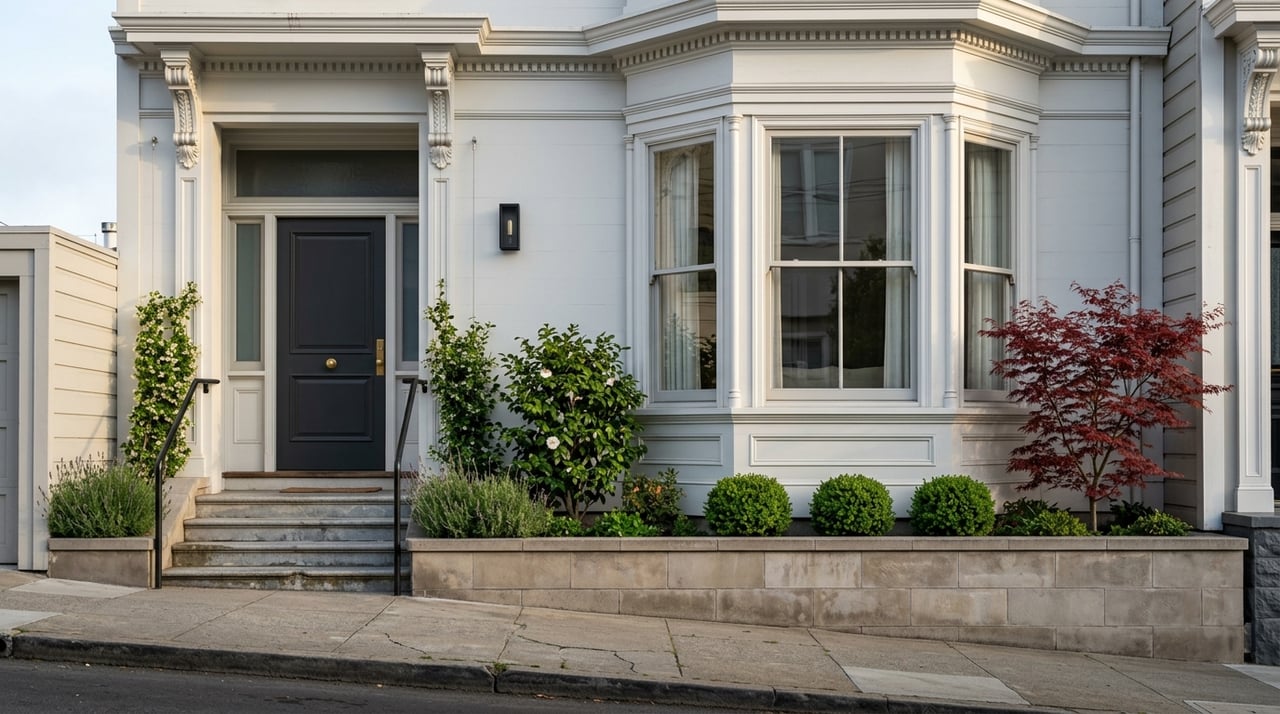
Pacific Heights has a strong walking character because the experience builds as you go. San Francisco Planning describes the neighborhood as a north-slope area where building heights rise toward the ridge, Bay views open down the streets, and the environment is shaped by setbacks, stairways, fences, paving patterns, and landscaped open space.
That matters when you are out on foot. Instead of one continuous promenade, Pacific Heights gives you a series of visual moments. A staircase frames a skyline view, a crest opens to the Bay, and a row of period homes shifts the feel of the next block.
Start With Alta Plaza Park
If you want one anchor for a Pacific Heights walk, start at Alta Plaza Park. The city places the park at Jackson and Steiner, bounded by Clay, Jackson, Scott, and Steiner, and notes its broad terraced staircase, city and Bay views, tennis courts, playground, basketball and pickleball court, and off-leash dog area.
This is one of the best places to get your bearings. The elevation gives you a clear sense of the neighborhood’s slope, and the edges of the park create multiple scenic approaches depending on which side you enter.
Best Alta Plaza Edges
The blocks around Clay, Jackson, Scott, and Steiner are especially useful if your goal is a scenic loop. These edges combine open sky, layered landscaping, and the kind of gradual reveal that makes Pacific Heights feel distinct.
One especially notable moment is the public corridor looking down Pierce Street from Alta Plaza Park. A 2016 planning record identifies this as a public view corridor, making it one of the clearest defensible answers to the question, “Where are the best views?”
What To Notice Here
As you walk the perimeter, pay attention to how the hill changes the scale of each block. Some stretches feel open and expansive, while others feel enclosed by architecture and greenery.
That contrast is part of the charm. Pacific Heights is less about one dramatic scene and more about how each block sets up the next one.
Lafayette Park Adds A Different Rhythm
Lafayette Park is the neighborhood’s other major green anchor. It is an 11.5-acre multi-use recreation area bounded by Laguna, Sacramento, Gough, and Washington, with city-and-Bay views, lawns, tennis courts, a playground, and an off-leash dog area.
Where Alta Plaza feels tied closely to the hillside, Lafayette Park gives you a broader, more settled pause. It is a useful stop if you want a walk that mixes architecture with open space and a place to sit for a while.
Best Streets Around Lafayette Park
The perimeter streets at Laguna, Sacramento, Gough, and Washington are the most natural loop. They let you experience the park from multiple sides while staying close to the residential blocks that give Pacific Heights much of its visual identity.
The park has also been public space since 1936, which adds to its role as a long-standing neighborhood anchor. For a strolling route, that history matters less as a headline and more as part of the neighborhood’s lived-in continuity.
Broadway Is A Strong Scenic Corridor
If you are choosing one street corridor to foreground, Broadway is a smart pick. Research from SF Heritage points to a Broadway-centered walk of about 15 blocks that shows a shift from grand single-family homes to multi-family, multi-story dwellings and apartment buildings.
That mix gives Broadway more than visual appeal. It also tells a clear story about how Pacific Heights developed over time, which makes the walk feel layered rather than repetitive.
Why Broadway Works On Foot
Broadway has the kind of variety that keeps you engaged. You can notice differences in scale, facade detail, and building type without feeling like the architecture blurs together.
It is also one of the safest corridors to mention for readers who want classic Pacific Heights atmosphere. The route is well supported by heritage walking-tour material and fits the neighborhood’s design-forward reputation.
Explore The Van Ness To Fillmore Spine
Another reliable architecture-focused route runs roughly from Van Ness to Fillmore. SF Heritage’s eastern Pacific Heights tour covers about 15 blocks in this area and begins at the Haas-Lilienthal House.
This corridor works well if your ideal stroll includes landmark architecture and a strong sense of place. It gives you a practical framework without making the neighborhood feel over-scripted.
A Key Stop: Haas-Lilienthal House
The Haas-Lilienthal House at 2007 Franklin Street, between Washington and Jackson, is one of the clearest architectural anchors in the area. SF Heritage identifies it as a Queen Anne-style house built in 1886 and designated Landmark #69.
Even if you are not planning a formal architecture tour, this stop helps set the tone. It places you immediately in the period character that many people associate with Pacific Heights.
Where Classic Houses Cluster
For readers asking where the classic houses are most concentrated, the Pacific Heights Historic District is the best framework. San Francisco Planning says it is roughly bounded by Pacific, Lyon, Steiner, and Green Streets and dates mainly from 1895 to 1930.
The district includes late-Victorian Queen Anne, Shingle, Arts & Crafts, Classical Revival, Colonial Revival, Tudor Revival, French Provincial, and Mediterranean Revival architecture. Planning records also note district buildings fronting Vallejo Street and Scott Street.
Streets Worth Slowing Down On
Vallejo Street and Scott Street are worth special attention if you want block-level character. These are not just pretty addresses on a map. They are part of the district record and help ground a walk in documented architectural significance.
This is also where walking slowly pays off. Rooflines, entry details, facade materials, and setbacks become easier to appreciate when you are not rushing toward a single destination.
Pacific Avenue Has Historic Weight
Pacific Avenue is another useful street to include in your route. Planning records say it was developed as the gateway to Pacific Heights and as one of the first links to Nob Hill, Montgomery Street, the Embarcadero, and the piers.
That background gives the street a little more narrative weight. If you are trying to understand Pacific Heights not just as a beautiful neighborhood but as part of the city’s broader development pattern, Pacific Avenue helps connect those dots.
The Pacific Avenue Crest
The crest along Pacific Avenue is one of the more reliable scenic story angles in the neighborhood. Like other high points in Pacific Heights, it rewards you with a shifting perspective rather than one fixed postcard view.
This is a good stretch to pair with either Alta Plaza or Broadway. It helps your route feel connected, with both visual payoff and historical context.
Hidden Corner: Bush & Broderick Mini Park
Not every memorable stop in Pacific Heights is grand. Bush & Broderick Mini Park, at Baker and Bush, is a smaller hidden-corner pause that the city describes as a quaint, landscaped respite flanked by Victorian flats, with picnic seating and songbirds.
This is the kind of place that makes a neighborhood walk feel personal. It is easy to miss if you are only following the best-known routes, but it adds a gentler note to a longer stroll.
Why Small Stops Matter
In Pacific Heights, the smaller moments often give a walk its personality. A mini park, a quiet stair run, or a framed downhill view can be just as memorable as a major landmark.
That fits the neighborhood’s design logic. The appeal is cumulative, and hidden corners help complete the experience.
Hidden Edge: Lyon Street Steps
For a more dramatic detour, the Lyon Street Steps deserve a mention. They sit on the edge of Pacific Heights near the Presidio, and published reporting describes them as a 332-step public staircase with expansive Bay and Marin views.
This stop adds a more athletic feel to your walk, so it is best treated as an optional extension. If you want a route with a stronger sense of elevation and payoff, it is a compelling choice.
How Steep Does Pacific Heights Feel?
That depends on your route. The neighborhood is defined by hills, and the official sources point to parks, stairways, and view corridors rather than one easy flat promenade.
If you want to keep things more relaxed, build your walk around Alta Plaza, Lafayette Park, and the Broadway corridor. If you want a more vertical experience, add the Lyon Street Steps or emphasize the ridge and downhill view lines.
A Simple Pacific Heights Walking Route
If you want an easy way to put these pieces together, try this sequence:
- Start at Alta Plaza Park.
- Walk the park edges along Jackson, Scott, Clay, or Steiner.
- Follow a route toward the Pacific Avenue crest.
- Continue through the historic district streets, with extra time on Vallejo and Scott.
- Head toward the Van Ness-to-Fillmore corridor and pass the Haas-Lilienthal House.
- Add Broadway if you want a longer architecture-focused stretch.
- Pause at Lafayette Park.
- If you want a quieter finish, include Bush & Broderick Mini Park.
- If you want a steeper finish, detour to the Lyon Street Steps.
This route works because it reflects how Pacific Heights is best experienced: as a series of connected scenes rather than one headline attraction.
Why This Matters If You Love San Francisco Neighborhoods
Walking Pacific Heights gives you a sharper feel for how San Francisco neighborhoods create identity through topography, architecture, and public space. You can see how parks anchor the hills, how view corridors shape the blocks, and how historic homes still define the rhythm of the streetscape.
If you are considering a move within San Francisco, this kind of neighborhood experience matters. A map can tell you where a park is or where a historic district begins, but walking the blocks shows you how the area actually feels day to day.
Pacific Heights is one of those places where details carry the story. The best way to understand it is to take your time, look up often, and let the neighborhood unfold one block at a time.
If you are exploring Pacific Heights as a place to buy or sell, David Poulsen offers local, concierge-level guidance shaped by deep San Francisco neighborhood knowledge.
FAQs
What are the best view spots in Pacific Heights for a walk?
- Alta Plaza Park, the Pierce Street public view corridor from Alta Plaza, Lafayette Park, the Pacific Avenue crest, and the Lyon Street Steps are among the strongest view-focused stops supported by the research.
What streets in Pacific Heights have classic historic homes?
- The Pacific Heights Historic District, roughly bounded by Pacific, Lyon, Steiner, and Green, is the best framework for classic homes, with Vallejo Street and Scott Street specifically noted in planning records.
What parks should you include on a Pacific Heights stroll?
- Alta Plaza Park and Lafayette Park are the two main open-space anchors, and Bush & Broderick Mini Park is a smaller hidden-corner stop for a quieter pause.
Is Broadway a good street for walking in Pacific Heights?
- Yes. Heritage research supports a Broadway-centered walk because it shows a clear range of building types and a strong architectural story over roughly 15 blocks.
How steep is a Pacific Heights walking route?
- Pacific Heights can feel moderately steep to quite steep, depending on whether you stay around the major park perimeters and main corridors or add stairways like the Lyon Street Steps.
Where should you start a self-guided walk in Pacific Heights?
- Alta Plaza Park is one of the strongest starting points because it combines views, elevation, and easy access to several scenic streets and architecture-focused routes.