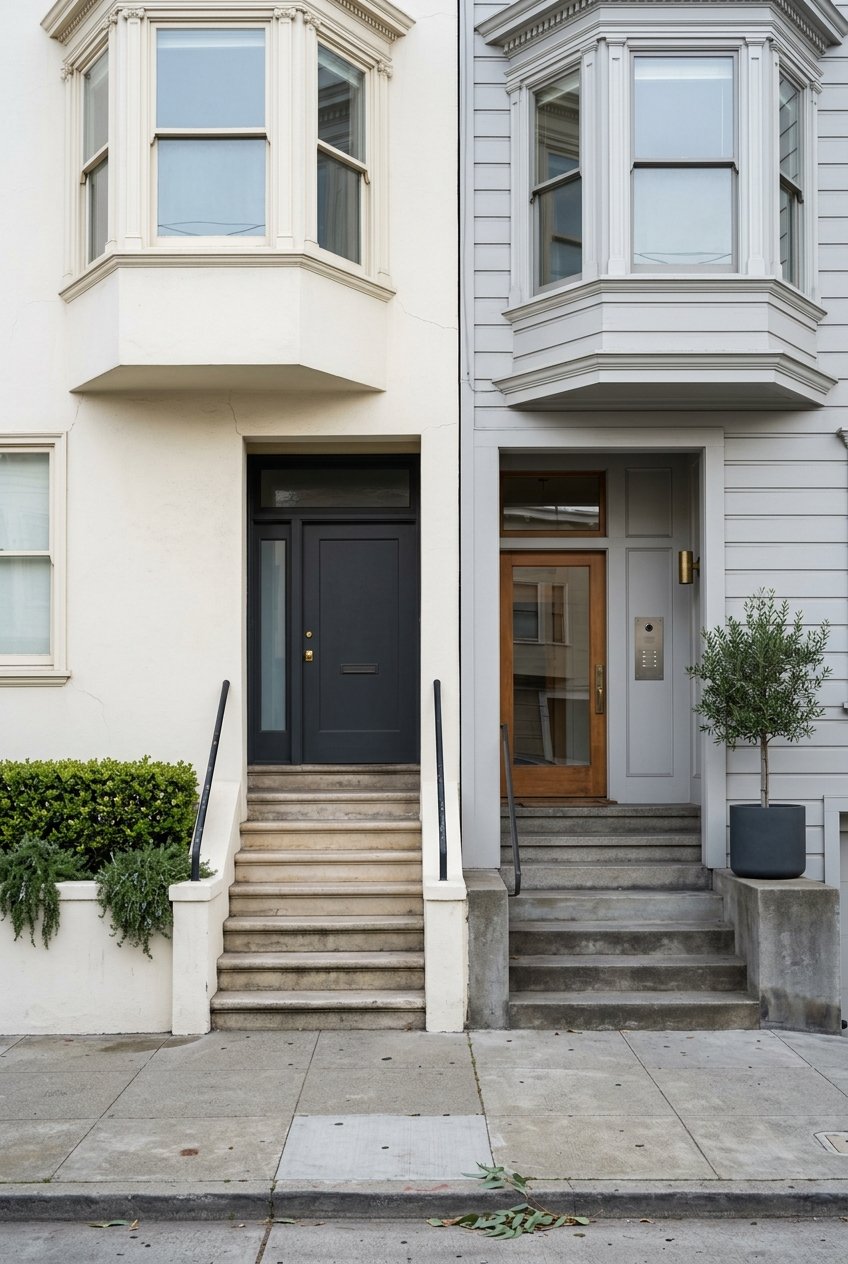
Trying to choose between a condo and a house in San Francisco’s Richmond District? You are not alone. In a neighborhood where classic prewar homes, smaller multi-unit buildings, and a limited condo supply can all sit within the same few blocks, the right choice is rarely just about property type. If you are weighing lifestyle, budget, upkeep, and long-term fit, this guide will help you compare the options in a practical way. Let’s dive in.
Richmond Market Snapshot
The Richmond District sits along San Francisco’s northwestern edge and includes Inner and Outer Richmond, the northern portion of Ocean Beach, Lands End, and Golden Gate Park. According to SF Planning, District 1 has about 78,695 residents and is defined more by residential streets, park access, and ocean exposure than by a high-rise condo landscape.
That local context matters when you start comparing condos and houses. In March 2026, the San Francisco metro median home sale price reached $1.7 million, while condo prices rose 24.4% year over year. In the Richmond-adjacent 94118 zip code, the median sale price for all home types was $2,556,500, homes sold in about 15 days, and the typical sale closed around 16% above list.
Even within the Richmond, pricing varies. Current market snapshots show Inner Richmond with an all-home-types median sale price of $1,986,762 and Outer Richmond at $2,099,220. Outer Richmond also had just 4 condos for sale, with a median listing price of about $914,000, which shows why condos can still be an important entry point for buyers who want to stay in the neighborhood.
Richmond Condos vs Houses
Why condos can make sense
A condo is a different ownership structure from a detached house. The California Department of Real Estate explains that condo ownership typically includes your unit plus a shared interest in common areas, which are owned or controlled through the homeowners association.
For you, that often means less direct responsibility for shared building elements like the roof, exterior, or common hallways. It can be a strong fit if you want Richmond access, a lower purchase price than many houses, and less day-to-day maintenance.
Condos may also suit buyers who want a more lock-and-leave lifestyle. If you like the idea of spending weekends at Golden Gate Park, Ocean Beach, or Lands End instead of managing exterior upkeep, a condo can feel more practical.
Why houses can make sense
A house usually gives you more direct control over the land, exterior, and improvements. That can appeal to buyers who want more privacy, more storage, more flexibility for updates, or outdoor space they can manage themselves.
In the Richmond, many houses and smaller residential buildings date back to the early 1900s, so condition can vary widely. Some are updated and move-in ready, while others may need repairs or renovation over time.
A house often makes the most sense if you are comfortable with higher upkeep responsibility and a larger budget. In exchange, you may gain more space, more separation from neighbors, and greater freedom in how you use the property.
Price Is Not Always the Deciding Factor
One of the biggest misconceptions in the Richmond District is that condos are always affordable and houses are always far out of reach. The current listing mix shows that the line is not that simple.
Recent examples include a 3-bedroom house listed at $1,098,000, a 2-bedroom condo listed at $899,000, a renovated 4-bedroom condo listed at $2,495,000, and a luxury 4-bedroom townhome listed at $4,495,000. On the sold side, a 94118 condo closed at $685,000 in May 2026, while nearby houses sold for $2,505,000 and $3,200,000 in the same month.
The takeaway is clear. In the Richmond, price is shaped by square footage, condition, parking, outdoor space, and building quality just as much as by whether the property is called a condo or a house.
Compare the Full Monthly Cost
Condo costs to review
A lower condo purchase price does not always mean a lower monthly cost. HOA dues are usually paid separately from your mortgage, and according to the CFPB, they can range from a few hundred dollars a month to more than $1,000.
That means you should look closely at what the dues actually cover. In an older coastal San Francisco building, monthly costs may include shared maintenance, reserves, master insurance, and other building expenses that affect your real budget.
When you tour a condo, ask for the HOA documents early. You want to understand the dues, reserves, rules, and whether there have been recent or upcoming assessments.
House costs to review
With a house, you usually will not have an HOA dues line item. But that does not mean the monthly picture is automatically easier.
Instead, you are the one directly funding repairs, exterior work, and long-term improvements. If the property is older, that can be a meaningful part of ownership cost over time.
For that reason, it helps to compare condos and houses based on total carrying cost, not just list price or price per square foot. That approach tends to produce a clearer answer.
Richmond Due Diligence Matters
Earthquake coverage questions
In California, earthquake risk should be part of your decision either way. The California Department of Insurance says standard homeowners and condominium policies do not cover earthquake damage.
For condo buyers, there is an added layer to review. After a quake, a homeowners association may require unit owners to share repair costs or deductibles through assessments, depending on the building and its insurance structure.
For house buyers, the question is more direct. You control the property, but you also carry the responsibility for evaluating your insurance options and future repair exposure.
Soft-story retrofit checks
San Francisco has a mandatory soft-story retrofit program for qualifying wood-frame buildings with five or more residential units built before January 1, 1978 that have a soft-story condition. This does not apply to every condo building, but it is a critical due-diligence item in older multi-unit properties.
Because Richmond inventory includes many older buildings, you should verify whether a property falls within the program and what the current status is. Do not assume that an HOA has already handled the work or fully funded it.
This is one area where careful document review can save you from surprises later. It is especially important if you are comparing an older condo building against a detached house.
Lifestyle Fit in the Richmond
The Richmond District appeals to buyers because of its geography as much as its housing stock. Golden Gate Park spans 1,017 acres along the Richmond and Sunset edge, Ocean Beach borders the city’s western side, and Lands End offers coastal trails and Golden Gate views in the northwestern corner of San Francisco.
That setting shapes what buyers value. Some want easy access to parks and coastline without the work of managing a yard or exterior. Others want more privacy, more separation, and outdoor space they control directly.
A condo may be the better fit if you want neighborhood access with less maintenance responsibility. A house may be the better fit if you want more autonomy and are prepared for the added ownership demands that come with it.
Questions to Ask on a Tour
If you are deciding between a Richmond condo and a house, these questions can help you compare properties in a more useful way:
- What is the total monthly cost, including mortgage, taxes, insurance, and HOA dues if applicable?
- What do the HOA dues cover, and how strong are the building reserves?
- Is there parking, storage, or exclusive-use outdoor space?
- What is the condition of the building or home, especially for older structures?
- Is the property or building affected by San Francisco soft-story retrofit rules, and what is the status?
- How close is it to Golden Gate Park, Ocean Beach, or Lands End?
- How much maintenance are you realistically willing to handle?
These questions move the conversation beyond condo versus house as a label. They help you focus on how the home will actually live and what it will actually cost.
Which Option Fits You Best?
If you value lower day-to-day maintenance, are comfortable with HOA governance, and want a practical entry point into the Richmond, a condo may fit you best. This can be especially appealing if your priority is enjoying the neighborhood itself rather than taking on more exterior responsibility.
If you want privacy, land, renovation flexibility, and more direct control, a house may be worth the higher cost and added upkeep. For some buyers, that tradeoff is absolutely the right one.
In the Richmond District, there is real overlap between larger condos, townhomes, and smaller houses. The smartest way to decide is to compare carrying cost, condition, HOA health, seismic considerations, and the kind of outdoor space you will truly use.
If you want help sorting through Richmond District options with a local, data-driven strategy, David Poulsen offers buyer and seller representation designed to make complex San Francisco decisions feel clear, polished, and well managed.
FAQs
What is the main difference between a Richmond District condo and a house?
- A condo usually includes ownership of your unit plus a shared interest in common areas managed through an HOA, while a house typically gives you more direct control over the land, exterior, and improvements.
Are Richmond District condos always cheaper than houses?
- No. Current Richmond listings show overlap, with some condos priced below houses and some larger or luxury condos priced well above smaller homes.
What costs should you compare when choosing a Richmond District condo?
- You should compare the full monthly outlay, including mortgage, property taxes, insurance, HOA dues, reserves, and any likely assessments.
What maintenance questions matter when buying a Richmond District house?
- You should review the home’s condition, likely repair timeline, exterior upkeep needs, and whether you are comfortable funding maintenance directly over time.
Why do soft-story retrofit rules matter for Richmond District condos?
- Older multi-unit buildings in San Francisco may fall under the city’s mandatory soft-story retrofit program, so buyers should verify whether a building is affected and what work has been completed.
Does standard insurance cover earthquake damage for Richmond District homes?
- No. The California Department of Insurance says standard homeowners and condominium policies do not cover earthquake damage, so buyers should review earthquake coverage options and related risks carefully.