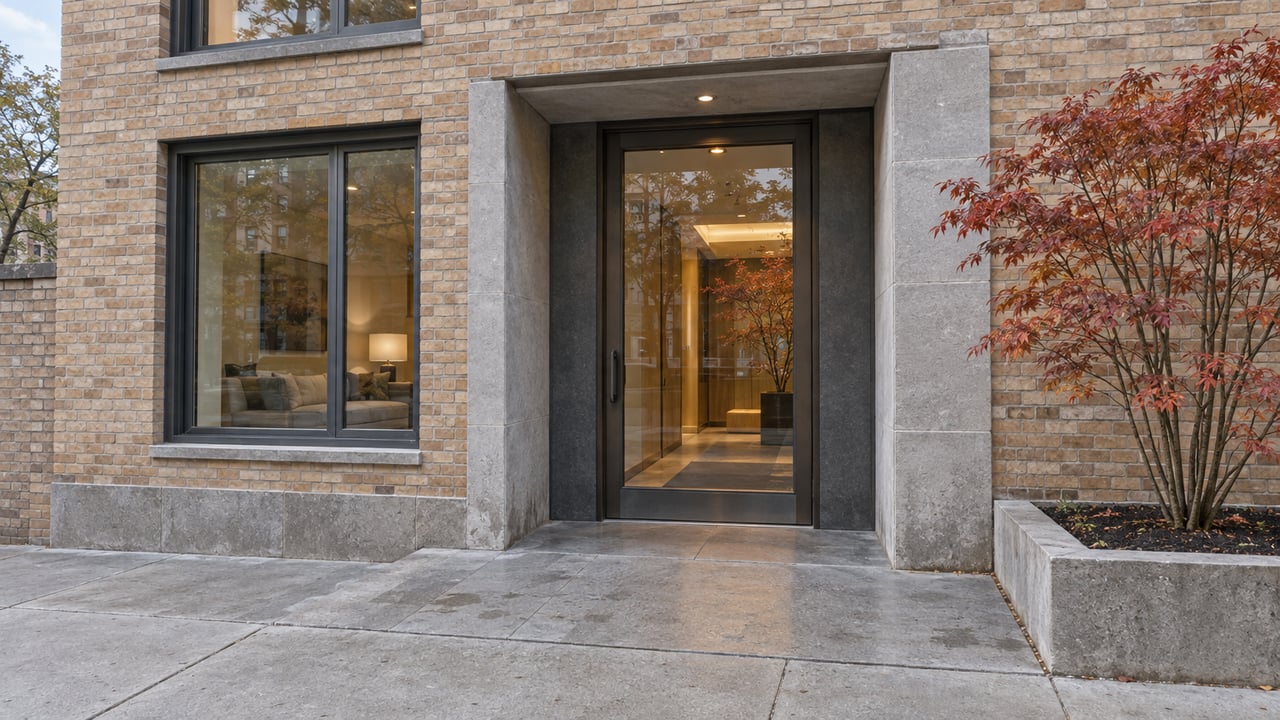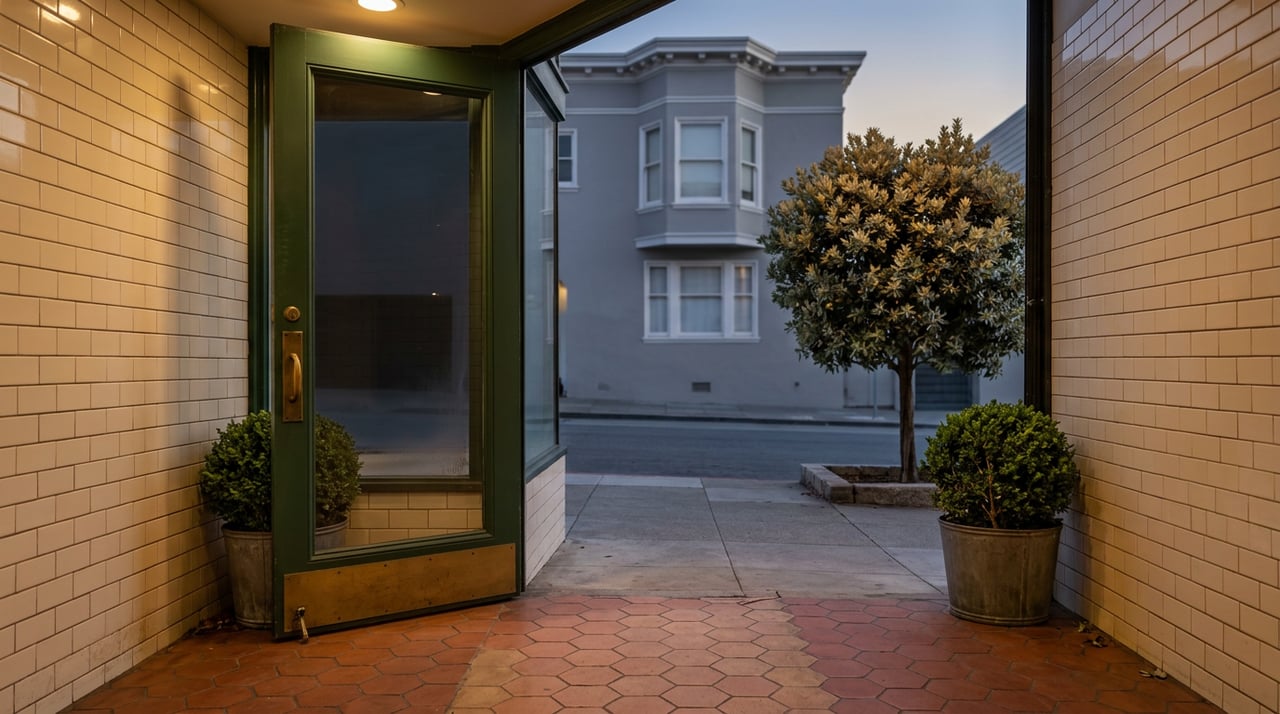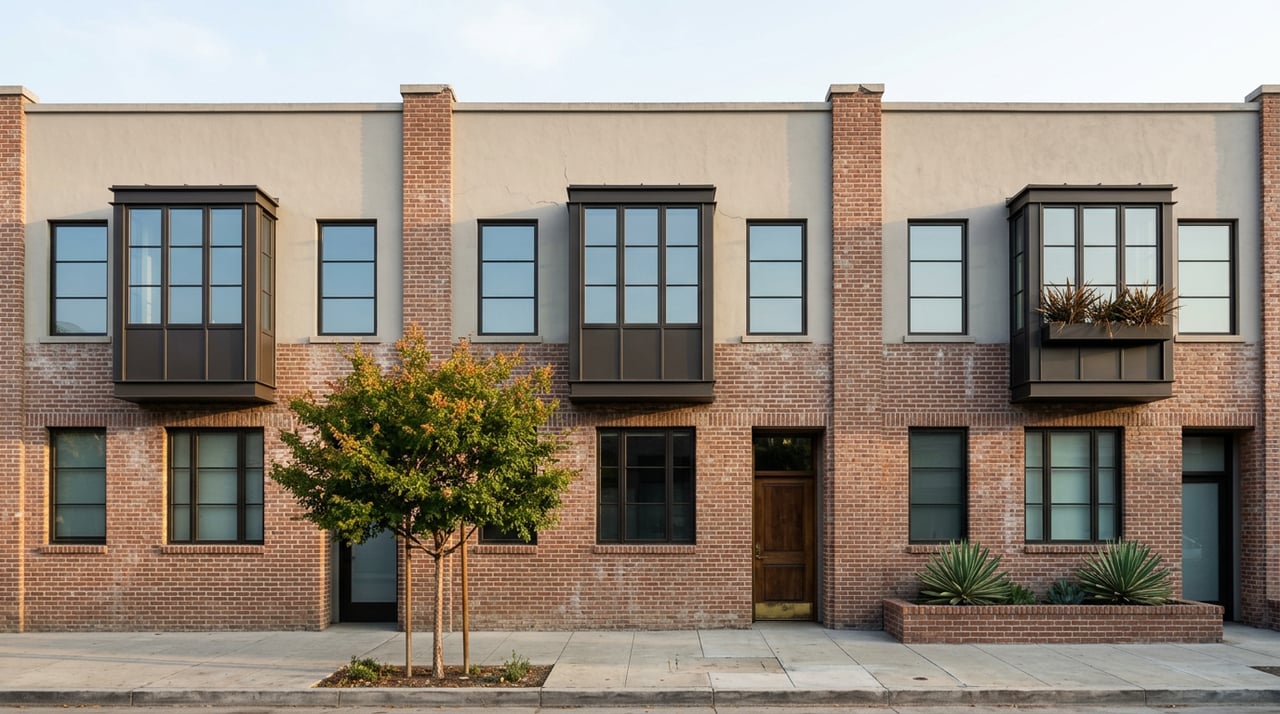
"We don't have fine dining out here right now, so we're hoping it adds something to the neighborhood." That's what chef Tommy Halvorson told a reporter last year, before Wolfsbane had served a single tasting menu. He wasn't being modest. Dogpatch has spent decades as the place you go for a taco, a slice, or a $95 tasting plate of Gujarati small bites, not a $248 seasonal menu with a wine list to match. In June 2026, the Michelin Guide gave Wolfsbane a star anyway, the first one this neighborhood has ever produced.
The easy read is that Dogpatch finally arrived, that a Michelin star means the neighborhood has crossed some invisible line from industrial-chic to full luxury. That reading misses the actual story, which is more specific and more useful if you already live here. The address at 2495 3rd Street has hosted two previous restaurant concepts that didn't survive. What changed wasn't the neighborhood's appetite for elevated food. It's that this particular restaurant built itself around how Dogpatch actually operates, instead of asking Dogpatch to change for it. You can see the same pattern at Esprit Park, the neighborhood's public green space, which took nearly a decade of fighting before landing on a design that finally works.
A Building With a Losing Streak
Before Wolfsbane, the same boiler room inside the old American Can Company factory was home to Serpentine, a brunch restaurant Halvorson himself ran starting in late 2016. Serpentine closed in 2020, early in the pandemic. Before that, Dogpatch's most notable attempt at tasting-menu dining was Aina, which debuted a six-course tasting menu in late 2017 and eventually shut down for good after a closure that had been announced as temporary.
Two runs, two closures, same three blocks. If you were looking for evidence that Dogpatch couldn't support anything beyond casual dining, this stretch of 3rd Street would have been your exhibit A. Rupert and Carrie Blease, who spent a decade building Lord Stanley into a Michelin-starred restaurant on Polk Street before closing it in 2024, chose to open their next project in exactly this spot.
What Wolfsbane Actually Changed
Wolfsbane didn't ask Dogpatch to become a different kind of neighborhood. It built two entry points into the same building. The main dining room seats eighteen and requires a reservation, which opens at midnight on the 15th of the month for the two months following, according to OpenTable's own writeup of the restaurant. If you can't get a table, there's a walk-in bar with a la carte dishes and no booking required at all, the same low-commitment option you'd expect from the casual spots that already fill this stretch of 3rd Street.
That distinction matters more than the star does. A restaurant that only offers an eighteen-seat reservation is a destination you plan a month ahead for. A restaurant that also lets you walk in for a drink and a plate of shellfish on a Tuesday is a neighborhood spot that happens to have a tasting menu in the back room. Halvorson has been cooking in Dogpatch for over a decade. He built the second option because he understood the first one alone wouldn't survive here a third time.
The price tells its own version of the story. A nine-course tasting menu runs $248 a person, or $383 with wine pairings, according to one recent guide to the restaurant. The San Francisco Standard ran the math on a full evening for two, food, wine, tax, and tip, and landed closer to $1,060. That's real money in a neighborhood where Besharam, the Gujarati restaurant a few blocks over, has built its reputation on a $95 chef's tasting menu. Wolfsbane isn't trying to compete with it. It's occupying a price tier Dogpatch has never had, while leaving the rest of the food scene exactly where it was.
The Same Fix, Applied to a Park
Esprit Park's recent history follows an almost identical shape. For most of its life as a public park, the entire two-acre lot was open lawn, and dogs ran off leash across all of it. As Dogpatch's population grew by more than 200 percent between 2010 and 2020, that arrangement stopped working. Families wanted a place to sit down without stepping around dog waste. Dog owners wanted somewhere their animals could actually run.
The San Francisco Recreation and Parks Department spent years workshopping a fix, eventually closing the park entirely for what became a two-year, $8.5 million renovation. Roughly half the cost came from UC San Francisco, which has built out a large campus a few blocks north and had its own interest in the neighborhood's public space working better. The redesign didn't pick a side. It split the park into a north meadow for off-leash dogs, with both natural and artificial turf, and a dog-free south meadow, connected by a path wide enough for two strollers to pass. Donovan Lacy, president of the Dogpatch and NW Potrero Hill Green Benefit District, called the finished renovation a space the entire community could finally use for decades to come when it reopened in February 2025.
The park still isn't finished tuning itself. A Recreation and Parks Department update from May 2026 notes the department has kept adjusting signage around the dog-free south meadow in direct response to complaints since the reopening, clarifying which service and support animals are still permitted there. That's not a design failure. It's the same logic as Wolfsbane's bar seating: build in a second way to use the space, then keep adjusting the boundary between the two until people stop testing it.
The Rest of the Block Didn't Change
If you're worried a Michelin star means your regular spots are about to get harder to get into or more expensive, the evidence so far says otherwise. Marcella's Lasagneria still serves homey Italian out of a small storefront with outdoor seating. Piccino still does milk-braised pork ragu and thin-crust pizza in an airy dining room built for the kind of catch-up dinner you don't plan a month ahead. Bandit's is still the counter-service breakfast spot locals hit on weekday mornings for a burrito loaded with tater tots. Sohn, the Korean-American café co-founded by chef Deuki Hong and Janet Lee, is still open all day as a gathering space rather than a reservation-only destination. Souvla still runs a location out of the old Magnolia's Brewery space on 3rd Street, serving the same Greek wraps and salads it's known for citywide.
None of that changed because one restaurant in the neighborhood picked up a star. Michelin stars recognize what a kitchen is doing on the plate, not what a neighborhood is becoming. Dogpatch's daily food rhythm, the taco-to-fine-dining stretch that residents have talked about for years, just gained one more data point at the fine-dining end without losing anything at the other.
What This Actually Tells You
The through-line here isn't that Dogpatch got fancier. It's that the neighborhood's most durable successes, at a restaurant address and in a public park, came from designs that refused to choose a single identity. Wolfsbane kept a walk-in bar instead of betting everything on an eighteen-seat dining room. Esprit Park kept adjusting its signage months after opening instead of declaring the split finished and moving on. Both took longer to get right than a simpler, single-purpose version would have. Both are still being fine-tuned as of this year.
If you live here, that's the pattern worth watching for whatever comes next, whether it's another restaurant testing the 3rd Street corridor or the next round of park or streetscape work from the Green Benefit District. The ones that stick around tend to be the ones built with an exit ramp for the way people already use this neighborhood, not the ones asking Dogpatch to become something it isn't.
David Poulsen has spent years tracking how Dogpatch and its neighboring San Francisco districts actually change, not just what gets announced. If you're curious how a shift like this one shows up in property values or what it might mean for a home you're watching in the neighborhood, sfhothomes.com is a good place to start that conversation, or schedule a free consultation directly.