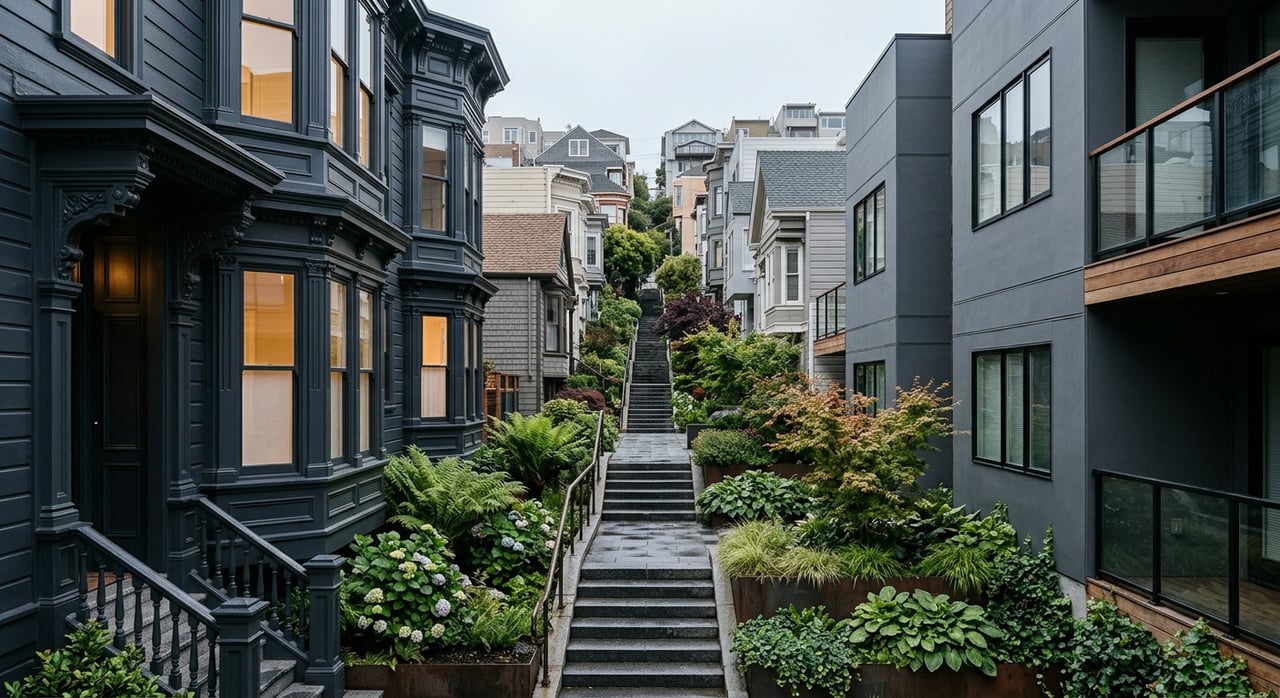
Wondering whether Potrero Hill is the right fit for you often leads to a second question just as important: which part of Potrero Hill? This San Francisco neighborhood can feel surprisingly different from one block to the next, whether you are drawn to quieter residential streets, easier day-to-day walkability, or an area evolving in real time. If you are trying to narrow your search with more confidence, this guide will help you understand Potrero Hill’s main micro-neighborhoods and what daily life tends to feel like in each one. Let’s dive in.
Why Potrero Hill Feels So Varied
Potrero Hill works less like one uniform neighborhood and more like a collection of overlapping pockets. San Francisco planning documents describe the hill itself as predominantly residential, while the lower edges shift into more mixed-use housing, retail, and neighborhood-commercial activity.
That pattern helps explain why the street feel changes so quickly. As you move between the crest of the hill, the 18th and 20th Street corridors, the 17th Street edge, and the southeastern side near Potrero Terrace and Annex, you are not just changing blocks. You are moving through different combinations of topography, building types, and street activity.
It is also worth noting that labels like North Slope and South Slope are commonly used local shorthand, not formal city-defined districts. They are still useful when you are trying to get oriented, but the best way to compare areas is by how they live on the ground.
North Slope: Quiet Streets and View Potential
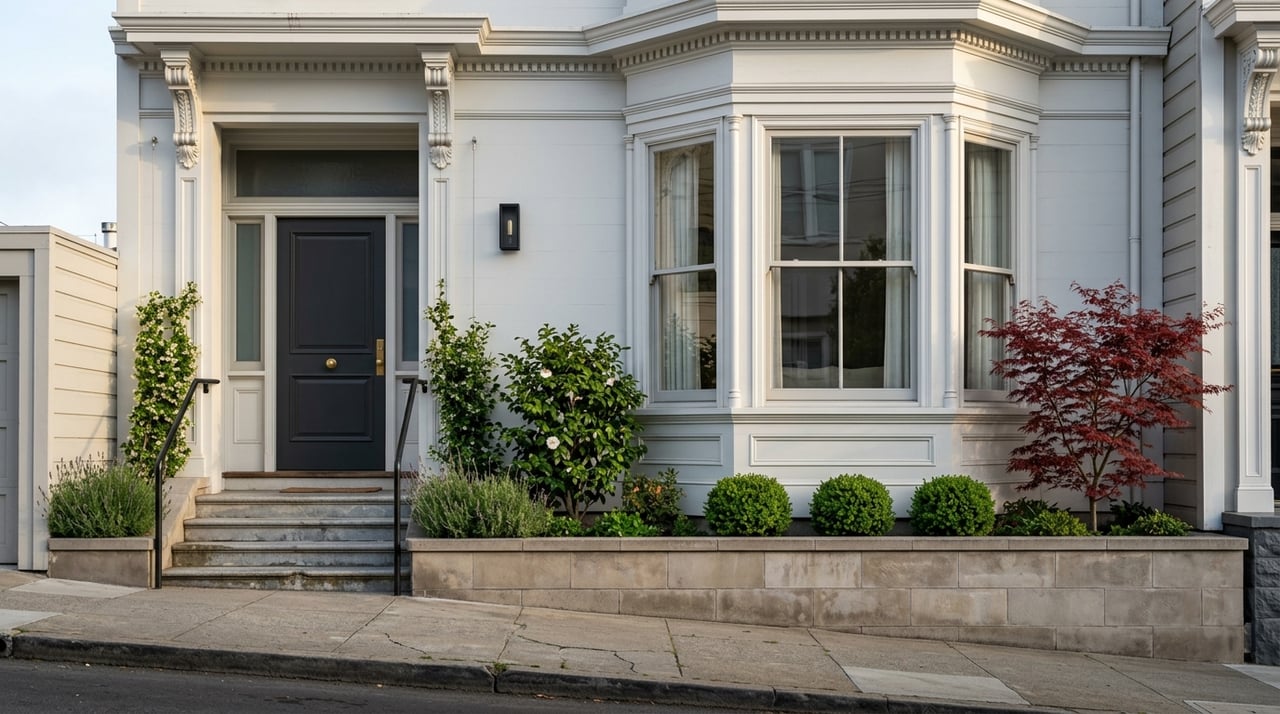
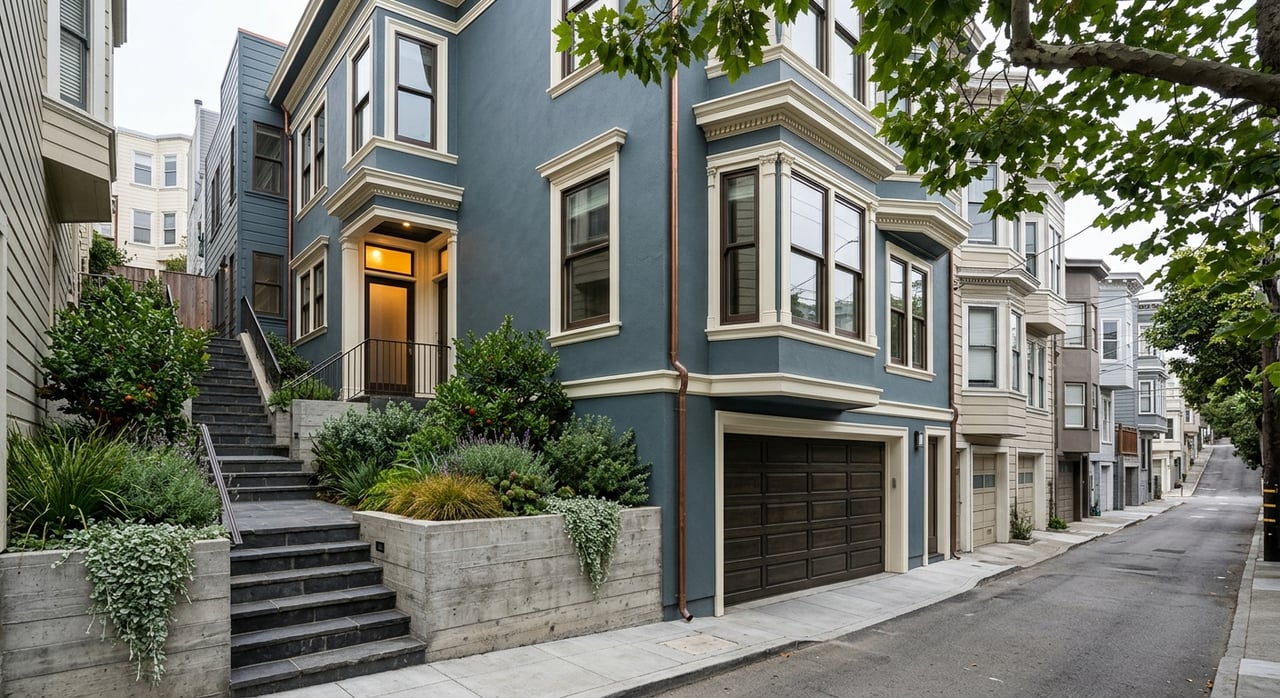
If you picture Potrero Hill as a classic hillside San Francisco neighborhood, you are likely picturing the North Slope. Planning materials describe this part of the neighborhood with Victorian-era single-family homes, two- to three-story buildings, narrow lots, and relatively wide residential streets that create an intimate feel.
This pocket is often the best fit if you want a more residential atmosphere and older housing stock. Higher points around 20th Street and near Potrero Hill Recreation Center have some of the neighborhood’s strongest view potential, with city environmental review materials noting vistas that can include downtown, the bay, Twin Peaks, Bayview Hill, San Bruno Mountain, and East Bay hills.
Another benefit is access to key neighborhood amenities without being in the busiest stretch. Jackson Playground sits at the bottom of the north slope, so you can still stay connected to one of the area’s central public spaces while enjoying blocks that generally feel more tucked away.
Who the North Slope Fits Best
The North Slope may be a strong match if you are looking for:
- Quieter residential blocks
- Older homes and classic San Francisco housing character
- Stronger view potential
- A lower-scale street feel
If your priority is convenience over calm, though, you may want to look closer to the neighborhood’s commercial corridors.
18th and 20th Streets: Everyday Convenience
For many buyers, this is the practical heart of Potrero Hill. City materials describe 18th and 20th Streets as neighborhood-commercial corridors with many retail and restaurant establishments, small storefronts, and a pedestrian-oriented design.
This area tends to make daily routines easier. If you like being able to step out for coffee, casual dining, errands, or other neighborhood services, this pocket usually offers the shortest path to that kind of walkable convenience.
The Potrero Branch Library at 1616 20th Street adds an important civic anchor here as well. It functions as more than a library, with community programming, seed lending, and a long-running annual artists’ exhibition that supports the neighborhood’s everyday rhythm.
What to Expect on the Corridor Blocks
Compared with the interior hillside streets, these blocks usually feel:
- More active during the day
- More walkable for errands and dining
- Less purely residential
- More connected to neighborhood services
If you want your home base to support a simple, car-light routine, this corridor often deserves a close look.
South Slope: A Neighborhood in Transition
The South Slope is where Potrero Hill’s long-term transformation is most visible. On the southeastern edge of the neighborhood, Potrero Terrace and Potrero Annex are being rebuilt through HOPE SF as a mixed-income community with new streets, utilities, open space, a park, neighborhood-serving retail, and community space.
San Francisco Planning says the full project is expected to include about 1,700 residential units and around 45,000 square feet of neighborhood-serving retail and community space. That scale makes this area especially important if you want to understand where change in Potrero Hill is happening now and what may shape the neighborhood in the years ahead.
This pocket can be compelling if you are comfortable with an area that may feel like a work in progress. It is less about settled sameness and more about watching a large redevelopment story unfold.
Why the South Slope Stands Out
This area may appeal to you if you want:
- Insight into Potrero Hill’s biggest redevelopment effort
- A location shaped by future growth and investment
- A better understanding of the neighborhood’s evolving southeastern edge
For some buyers, that future-oriented story is a plus. For others, a more established residential setting may feel like a better fit.
17th Street: The Most Urban Edge
If you want a more animated street environment while staying in Potrero Hill, the 17th Street edge is worth your attention. City planning materials point to neighborhood-serving retail and business near Jackson Playground along 17th Street, while SFMTA describes the corridor as a mixed-use stretch with large multifamily residences, eateries, retail, services, commercial uses, manufacturing, parks, and nightlife.
In simple terms, this is one of the neighborhood’s most urban-feeling edges. It connects Potrero Hill to surrounding activity in a way that can feel more transitional and energetic than the quieter streets higher up the hill.
This part of the neighborhood also matters if bike and pedestrian comfort are on your checklist. SFMTA has made 17th Street a safety-improvement priority, which adds useful context if you are evaluating not just the current streetscape, but where public investment is being directed.
Best Fit for 17th Street
You may prefer this pocket if you want:
- A mixed-use environment
- A more active street scene
- Stronger connection to transit-oriented living
- Proximity to ongoing street-safety improvements
Housing Choices Change by Pocket
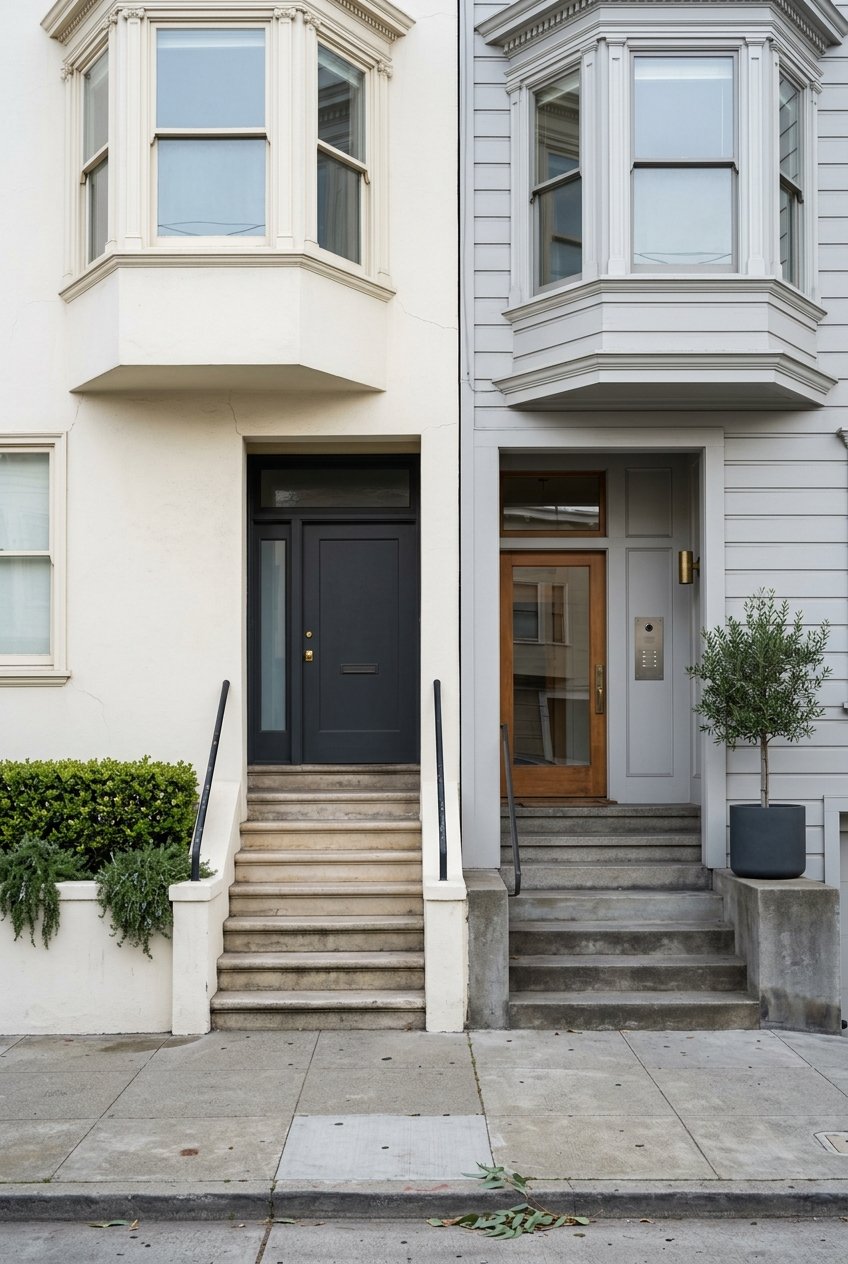
One reason Potrero Hill appeals to such a wide range of buyers is that it is not a one-product neighborhood. Planning Department profile data shows a mix of owner-occupied and renter-occupied housing, along with a broad range of building types that includes single-family homes, 2-to-4-unit buildings, and larger multifamily properties.
That variety shows up clearly across the micro-neighborhoods. The hill itself tends to feel more lower-scale and residential, while the base of the hill shifts toward mixed-use buildings and retail activity.
So when you compare one part of Potrero Hill to another, you are often comparing more than price or views. You are choosing between older detached or semi-detached homes, smaller flats, corridor buildings near services, and housing in areas shaped by major redevelopment.
Daily Life Factors to Weigh
Micro-neighborhood fit is not just about aesthetics. It is also about how you want your day to work.
Potrero Hill is served by a wide range of Muni lines, including the T Third Street, 9 San Bruno, 9R San Bruno Rapid, 10 Townsend, 19 Polk, 22 Fillmore, 27 Bryant, 33 Ashbury/18th Street, 48 Quintara/24th Street, and 55 Dogpatch. At the same time, city planning documents note that transit in Potrero Hill is still primarily crosstown, and improved downtown connections remain a priority.
That means car-light living is possible, but it may not feel equally easy in every pocket. If transit convenience is high on your list, it makes sense to compare not only the neighborhood overall but also the specific blocks you are considering.
Public amenities are another big part of the equation. Potrero Hill Recreation Center includes an athletic field, playground, dog play area, community garden, gymnasium, basketball, tennis, and community rooms, while Jackson Playground offers 4.4 acres of park space at the bottom of the north slope.
These amenities can change how a location feels in daily life. For some people, being near parks and community spaces matters just as much as being near cafes or transit.
A Quick Potrero Hill Fit Guide
If you want a simple way to narrow your search, start here:
- North Slope: best for quieter blocks, older homes, and stronger view potential
- 18th and 20th Streets: best for cafes, casual dining, errands, and walkable convenience
- South Slope: best if you want to follow the neighborhood’s major redevelopment story and are comfortable with change
- 17th Street edge: best for a more mixed-use, active, and urban street environment
The key is not finding the “best” pocket in general. It is finding the one that best matches how you want to live.
Potrero Hill rewards buyers who pay attention to nuance. A few blocks can change your access to views, parks, storefronts, transit, and street activity, which is why local guidance matters so much here. If you want help comparing specific blocks, building types, or available homes in Potrero Hill, David Poulsen can help you evaluate your options with clear, neighborhood-level insight.
FAQs
What are the main micro-neighborhoods in Potrero Hill?
- Potrero Hill is commonly understood through pockets like the North Slope, the 18th and 20th Street corridors, the South Slope, and the 17th Street edge, even though some of those labels are informal rather than official city districts.
Which part of Potrero Hill feels the most residential?
- The North Slope generally offers the quieter, more residential feel, with older homes, lower-scale streets, and stronger view potential at higher elevations.
Which area of Potrero Hill is best for walkable errands and dining?
- The 18th and 20th Street corridor is usually the strongest fit if you want coffee, casual dining, errands, and neighborhood services within a shorter walk.
What is happening on the South Slope of Potrero Hill?
- The southeastern edge near Potrero Terrace and Potrero Annex is being rebuilt through HOPE SF as a mixed-income community with new housing, open space, retail, and community-serving features.
Is 17th Street in Potrero Hill more urban than the hill itself?
- Yes, the 17th Street edge is described as a mixed-use corridor with residences, eateries, retail, services, parks, and nightlife, so it tends to feel more active and urban than the upper residential blocks.
Does Potrero Hill have good transit access?
- Potrero Hill is served by many Muni routes, but city planning documents note that transit is still largely crosstown, so convenience can vary depending on the specific pocket and your commute needs.